Brew methods
Prep espresso with a hand grinder.
Fine grind, even puck, steady dose. A calm prep routine for espresso at home with a conical burr hand grinder.
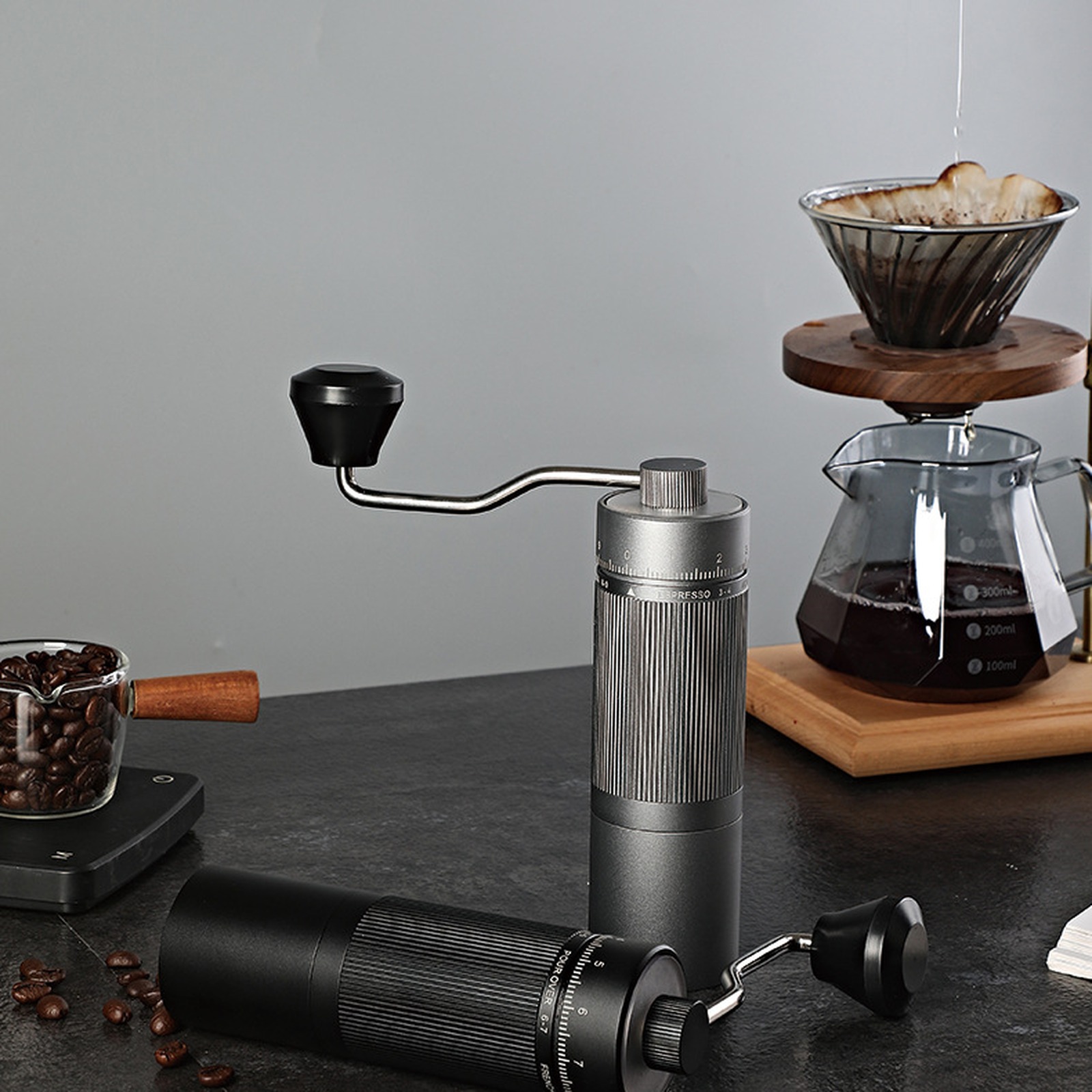
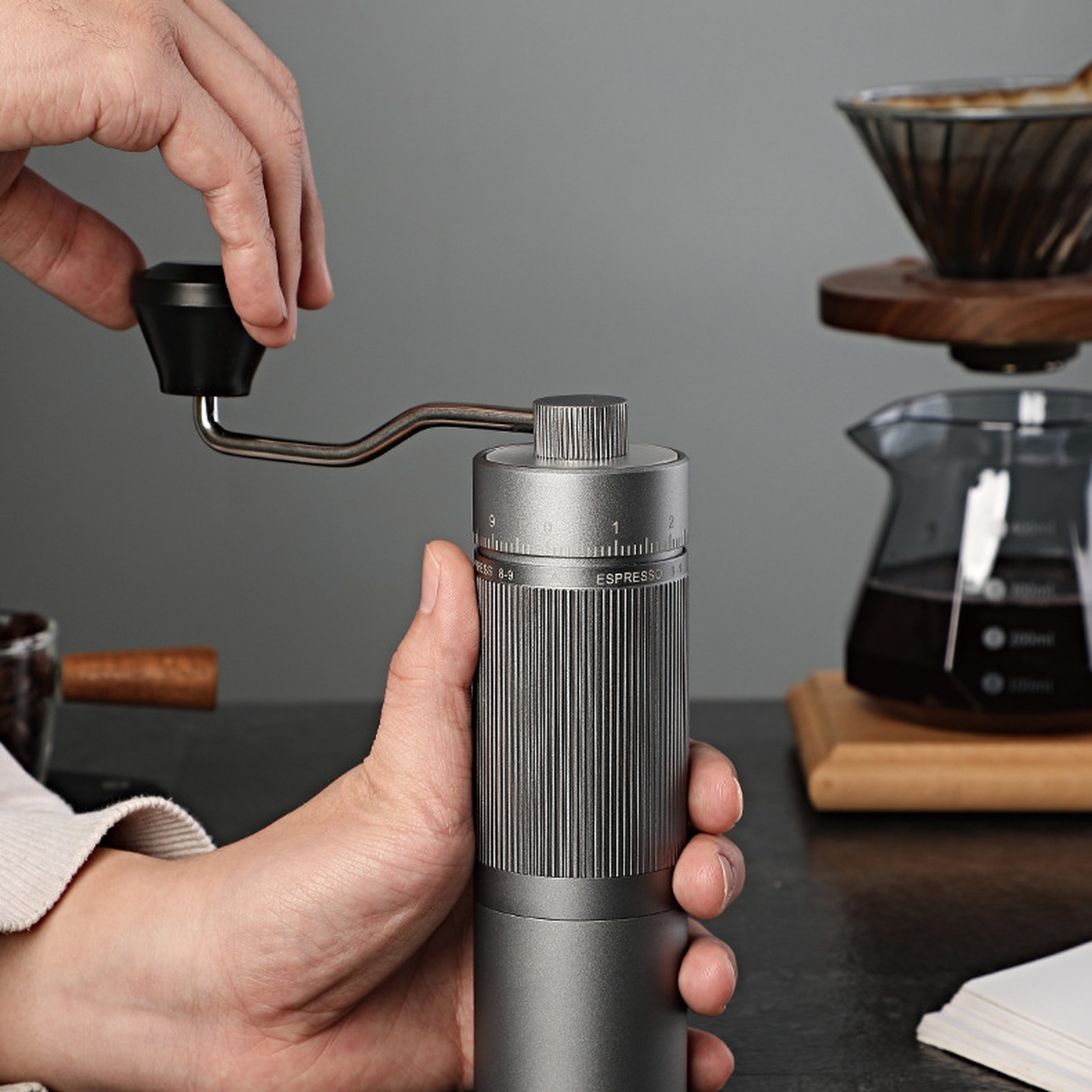
Reference finishes shown. Obsidian Black is the purchasable finish.
What espresso asks of a hand grinder
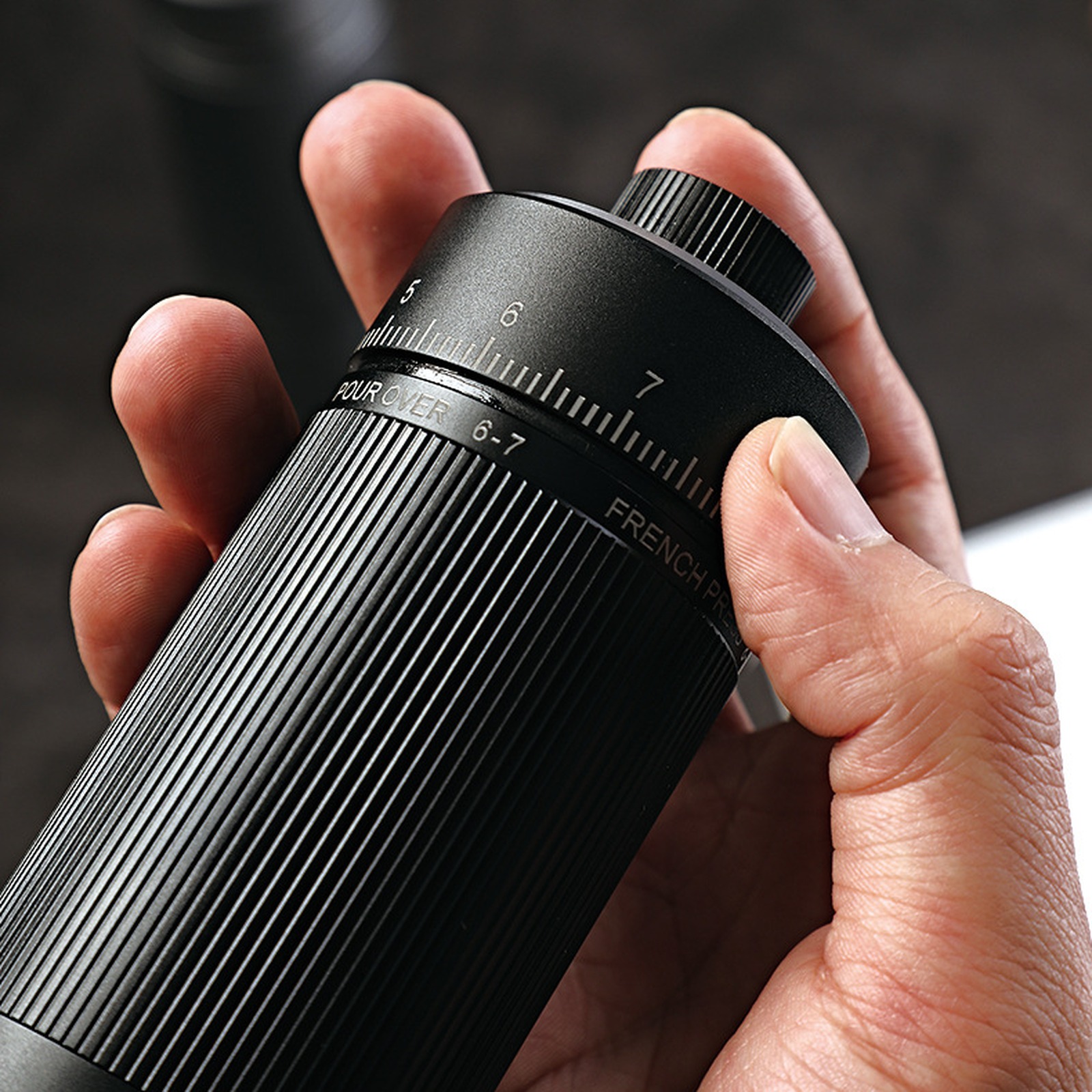
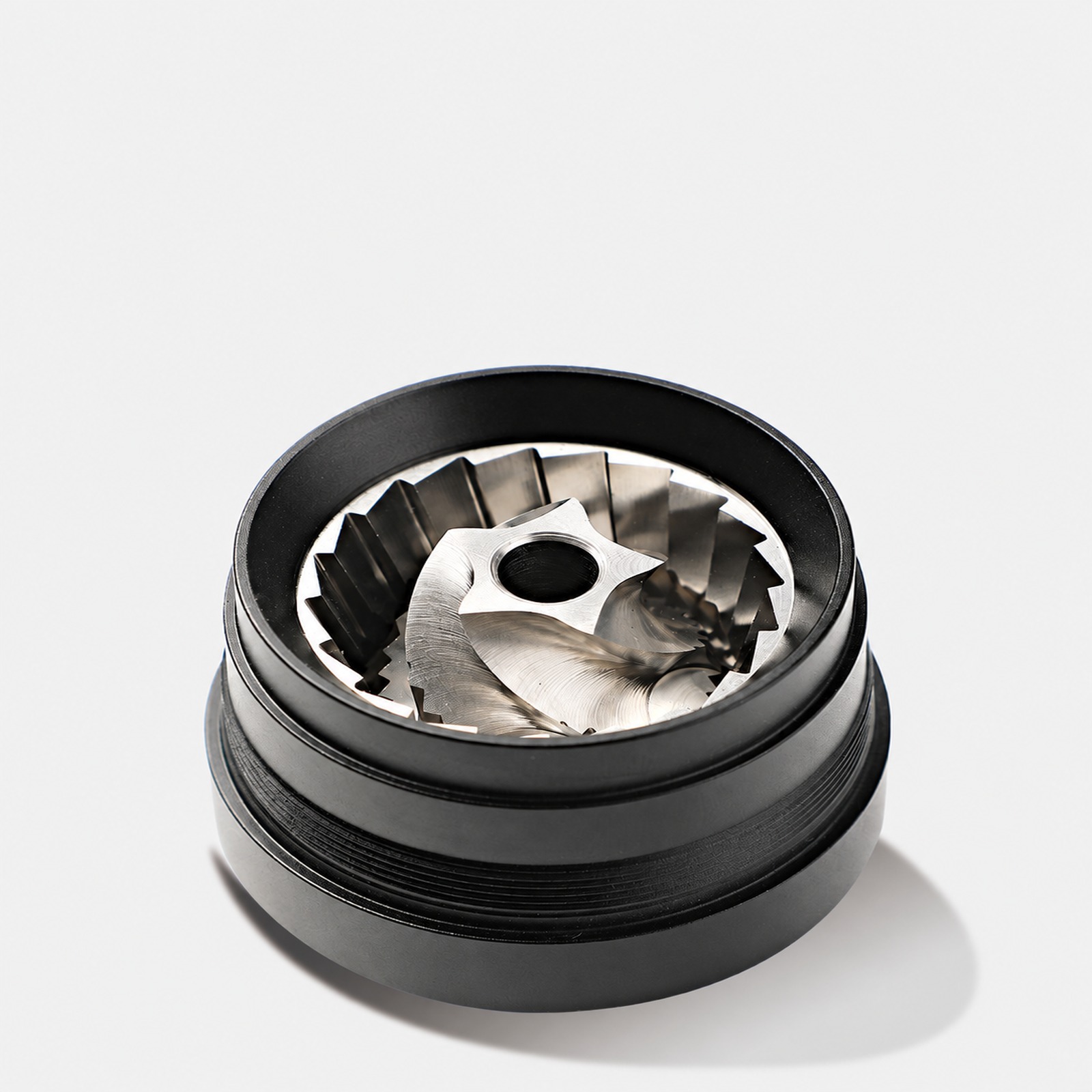
Espresso needs a fine grind so water meets enough resistance in the basket. A conical burr hand grinder can get there—the trade-off is more turns and a more careful dial than a pour-over setting.
Start from your basket’s dose guidance and a fine setting on the external dial. Write down the bean, roast date, dose, dial number, and what the shot tasted like. That record matters more than chasing a single shot time.
Dose, distribute, then tamp
Weigh the dose into the basket when you can. Clumps and high spots channel water around coffee instead of through it, so distribution comes before the tamp.
A WDT tool (thin needles) stirs the bed gently to break clumps. A magnetic dosing funnel helps keep grounds in the basket while you distribute and tamp. Together they reduce mess and make the puck more even—useful habits whether you pull on a machine or a lever setup. See the WDT tool and magnetic dosing funnel set if you want that combo in one kit.
Keep dose and yield steady. Change one thing. Taste again.
Dial by taste, not by myth
If a shot barely drips, stop and move a small step coarser before the next attempt. If it rushes through pale and thin, check dose and distribution first, then try a small step finer.
Keep yield (beverage weight) and dose steady while you change grind size. Water temperature, basket type, and roast level also move the result—treat grind as one lever among several. For relative starting points across brew methods, read Hand-grinding: pour-over vs espresso and Grind size basics.
A simple home routine
Warm the portafilter if your machine allows it. Grind a weighed dose on a fine setting with the conical burr hand grinder. Seat a dosing funnel, stir lightly with WDT needles, level, then tamp evenly. Pull the shot, taste, and note one change for next time.
Empty the catch cup and brush loose grounds after brewing so yesterday's setting does not flavor today's cup. Small, repeatable steps beat a long list of gadgets.
Dial numbers are relative starting points. Keep a record of your beans, dose, setting, and taste to make the next adjustment easier.
Also listed on

Keep reading